“Be A Human, Don’t Be a Dirty F**kin’ Bigot”: An Interview with PB Madrid
Extensive Interview ★ Nash Jones★ @nashwritessometimes★ 15 Minutes
“We were a bunch of snot-nosed kids who fuckin’ came in the scene and played punk weird. I was like, maybe fifteen, sixteen… We had math class the next day, you know?”
Oklahoma City has been my home since last May, an inspiring place to be as a music business student. I’ve seen shows in dives, DIY venues, cocktail bars, and several larger venues. Oklahoma City is up-and-coming in regards to the touring industry, their infrastructure and location benefits both still highly underutilized in my opinion. Regardless of this, OKC has a thriving underground where I’d find myself watching a set by a band I knew nothing about, while on the other hand also seeing many of my peers on the bill. Shoegaze and Punk are the scenes I’ve seen the most of, though I’m still unaware of much of their stories. Who better to speak to about the lore of the current OKC Punk scene then, than someone who has been involved in it for the better part of a decade?
PB Madrid is perfectly content in telling me everything about this topic.
“It’s crazy, no one’s ever talked to me, like, about this stuff before.”
Madrid has played bass guitar and electric guitar in separate punk projects in the Oklahoma City Punk scene, but grew up playing cello in orchestra. We start there.
“That’s where I learned to read music… and be good at tempo. Tempo is very, very important to me. I never listened to a whole lot else… there was your occasional video game soundtrack.” They’ve shown me a lot of whimsical music that I've never heard of, so this makes sense to me. Where did punk come in then?
PB tells me it was the community aspect of punk that first drew him in. “I will always love orchestral music, but I grew disillusioned to it, to an extent. It was just, I felt like I didn’t belong there anymore because I found a community that I feel like I do truly belong in. And they don’t have fuckin’ money to blow on random bullshit either.”
When it comes to how he learned the music, he tells me a story of him and his friends.
“In tenth grade I met… one of my best friends, Jet. We went over to our friends’ house one day and she had this bass guitar, and I just thought it was the coolest lookin’ fuckin’ thing. Like, the strings are huge, and the machine heads… It looked beautiful. I was like, ‘I think this is so cool, I wanna try and play one.’” Then the opportunity presented itself. “One day, Jet was just like ‘Hey, I got a bass guitar, you wanna be in a punk band with me?’ So I taught myself a bunch of Queen, a bunch of Primus, and then he gave me a bunch of songs to learn… That was my first time really hearing, like, Black Flag and Minor Threat and Descendents.”
“So was it Jet who moreso introduced you to punk music at large?”
“Not even moreso, he fuckin’ just did it. There’s a good chanceI wouldn’t be a punk, or at least not like I am, without Jet. He set me on the straight and narrow there.” He and Jet Hoffman continued to jam and practice, and PB continued to improve. At this point they were both thinking, “where are we going to play?”
“I was trying to do something with Jet, and Jet was trying to do something with his other friends… one day, Jet was like ‘Dude, I found the scene.’” It was Madrid’s first time in a DIY Punk venue, they tell me.
“It was what was known as the Mothership Connection… it was just the venue that all the punk bands would play back then. It was also my first mosh pit… I was scared. I had my wire glasses on and everything, and I was kind of a square…. And then we went to this one gig that I think really started it all for me… Jet invited his friend Jo, who does guitar for Rockstar [Nightclub] now. We instantly got along… We were like, ‘fuck we got these two groups… why don’t we just combine them?’”
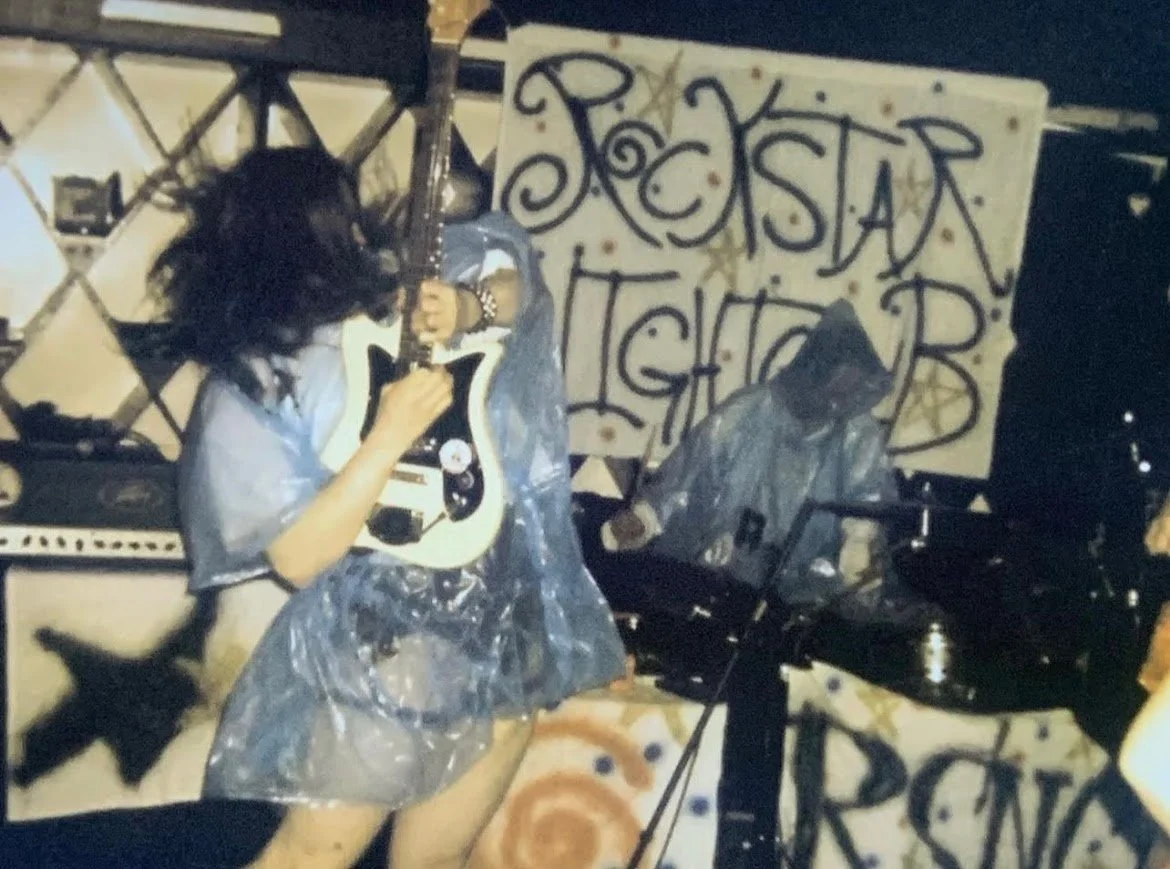
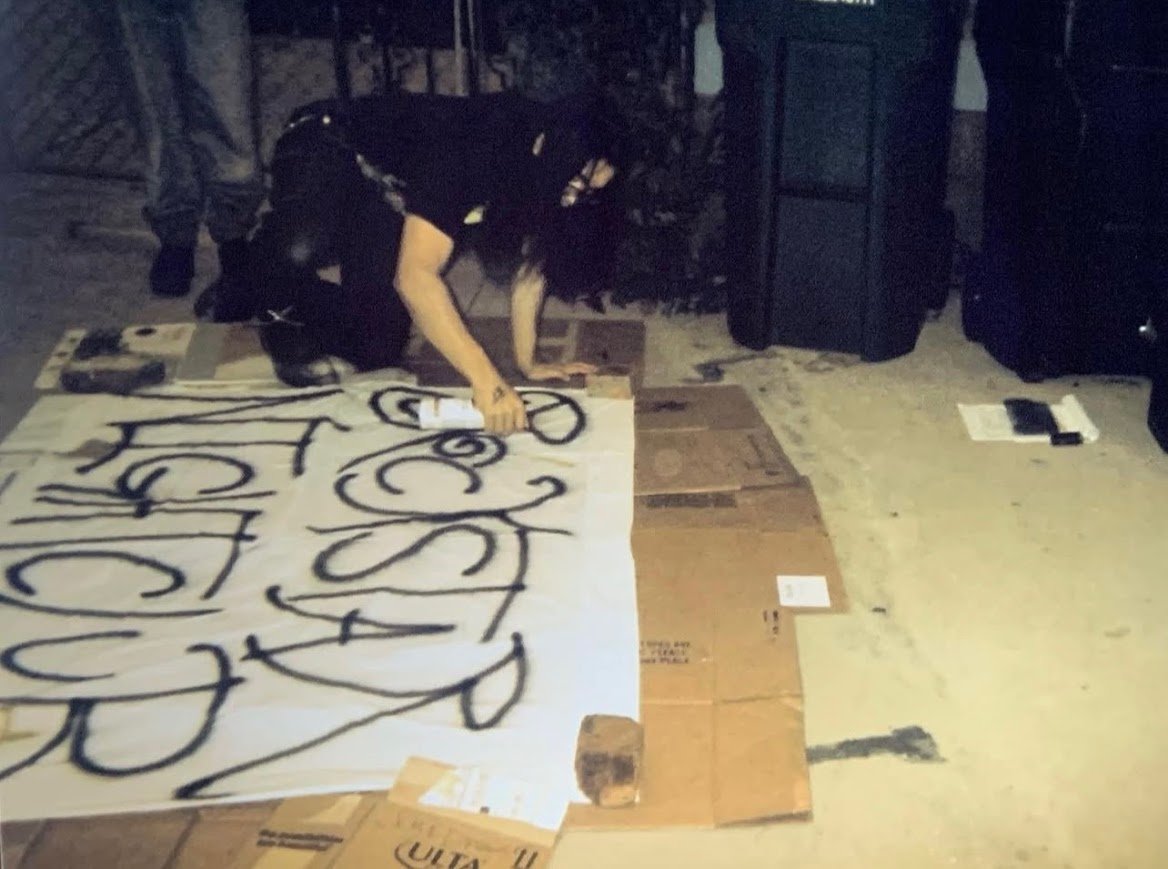
Photos from Rockstar Nightclub via @ladybug_superfly on IGThey instantly met Bell, who offered to get them a gig. “We were just… trying to like, establish some semblance of music, and here comes this person with a giant fuckin’ septum in their nose and a big fur coat, like ‘Hey, I can get you a gig here.’ That’s kind of how the DIY, especially the Punk scene is, everyone looks out for each other.”
What happened that night was the formation of a band called Shaka, but also PB’s eyes were opened to the Punk community. They discuss a girl being kicked against a drum rim- she was knocked out. “So, we carry her out… The show stopped, and the guy who did it got fuckin’ chewed the fuck out. It was this crazy scene… once more people started noticing, the music didn’t matter. It was just like, we need to fuckin’ help this girl… In a weird, sort of macabre way, that was my introduction. Like, woah, these people are kind of, like a band of misfits, all trying to actively help each other. This girl got her shit rocked, and everyone who noticed was doing their best to help, like going to buy water for her, calling an ambulance- it was fuckin’ freezing- so making sure she was warm, that her head was straight. It was a fucked-up situation for me to see it, but it was just seeing this community be a community in a really bad moment… they stick together and will actively look out for you.”
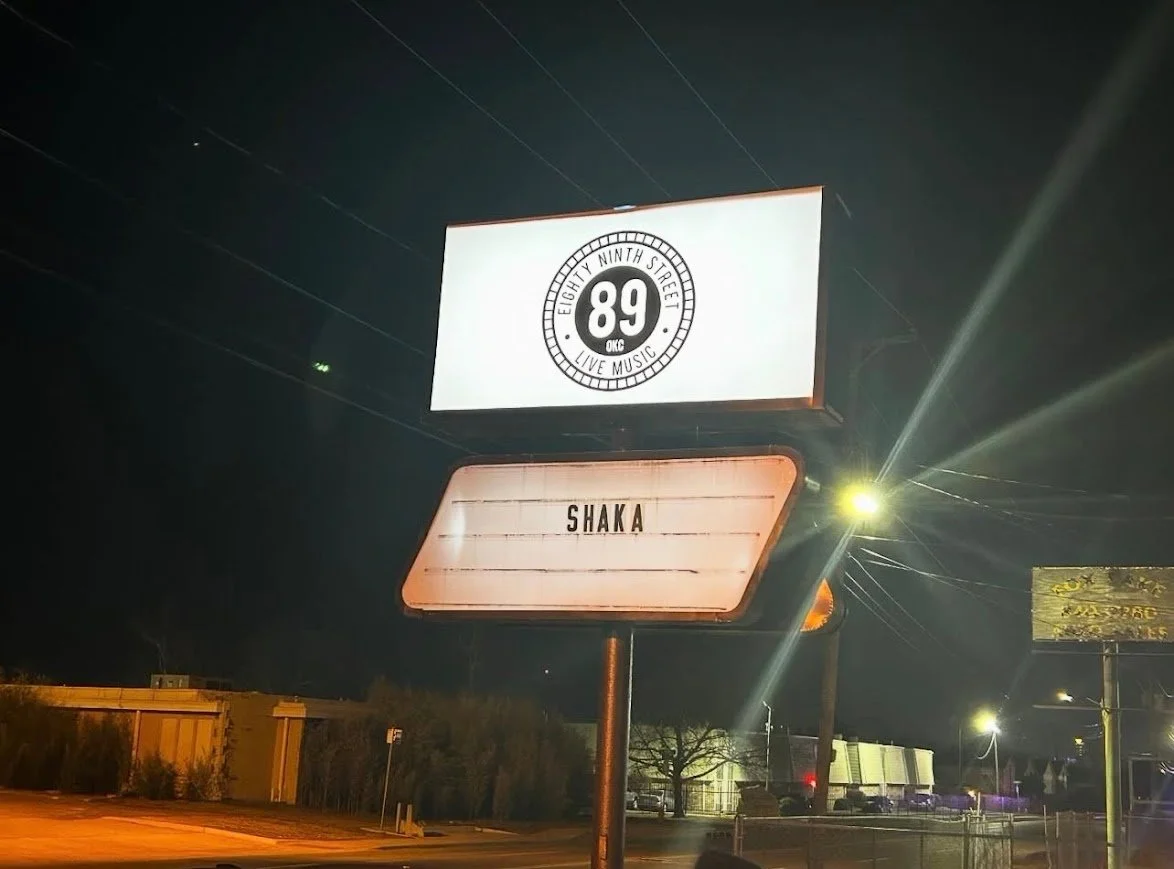
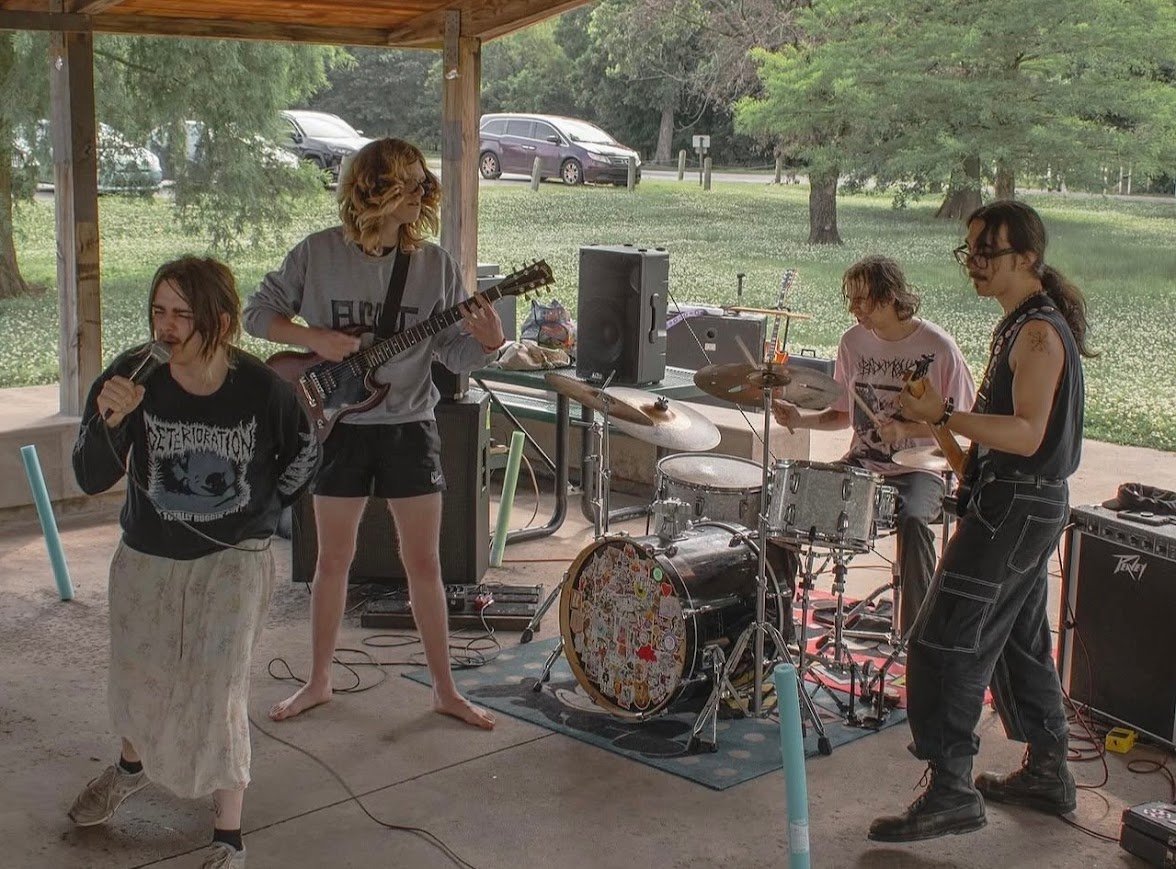
Shaka (left) via @coleson_dibeck on IG (right) via @emma.mcglasson on IGFollowing that allegory, PB swivels back to the music aspect of punk. “We started playing as Shaka, and Jo got me into more music.”
“What got you into the sound after having mainly listened to music that was so different?”
Madrid says that he was actually put off by the sound at first. “I was not a rockhead. There were songs on the radio that I liked the sound of, but never really listened to a lot. A lot of my music tastes were like, I fuckin’ love the Seventh Symphony… I was huge on The Nightmare Before Christmas [soundtrack]… It just blew my fuckin’ mind.” When they started playing bass, their music tastes began to expand. “The thing that drew me to it was less the sound and more the way people would play. There was this hard-ass music… fast, raunchy, heavy fuckin’ punk that people were pummeling each other to. Then they’d get off stage and it’d be like ‘Dude, that was fuckin’ awesome.’ And they’d be like ‘Hey man, thanks. What’s your name? It’s good to see you here.’ You know, you expect them to be so standoffish.”
He expands on this, mentioning the former band Picket Line, discussing frontperson Zach Green, who is currently in Punk band Inferna. “Zach alone is a huge help to me and like, doing the whole Punk thing, but also in… kind of setting the stage for what these punks kind of act like… Once I got an ear for the sound, that changed it all, but just seeing Zach just be themselves… and establish ‘This is not a bigoted culture, and we do not welcome people who lay their hands on women, or touch anyone without their full, unadulterated consent’…” Madrid goes on to discuss another band that supported Shaka when they were new to the scene.
“One of my favorite bands that we played with was called Crush Crusher… They were so fuckin’ good, man. They were one of the bands we would play with when we were still trying to figure out our sound…We were still trying to make songs of our own while figuring out all the noise. We made this one song called Drug Love, and it was my favorite fuckin’ song, and I found out, like, we literally rewrote Blitzkrieg Bop without knowing it. We would pick up on things that we really really liked [from other local Punk bands] and a lot of the words… it’s like folk music, y’know?”
Madrid tells me about their bass inspirations early on. “Primus is by no means punk, but I tried to borrow from it a lot, like I slapped a fuckton in Shaka… Gwar helped me a lot, too… They have such cool riffs that I couldn’t help but be inspired by the breakdowns and the tones of their instrument… What it all boils down to is, I just started listening to more music, but it felt more special than that.”
I mention to them that a lot of the times when they mention a local band that inspired them, they refer to the band in a past tense.
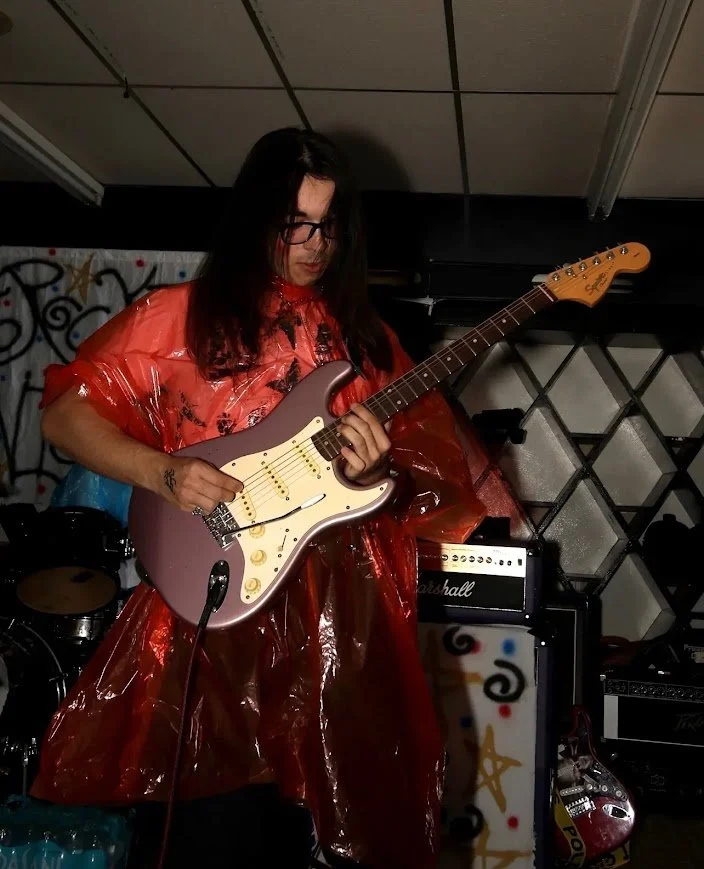
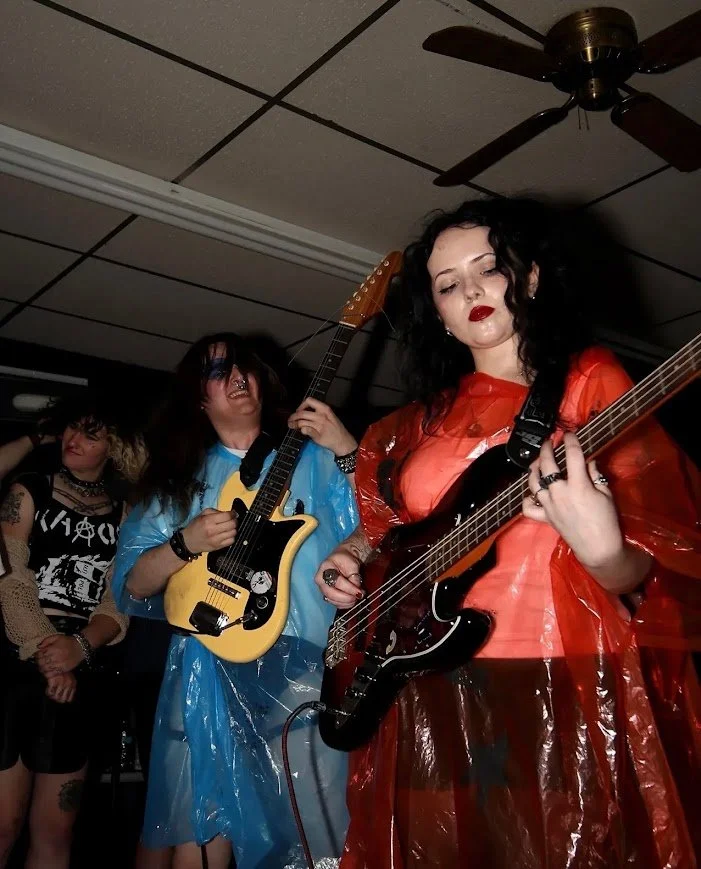
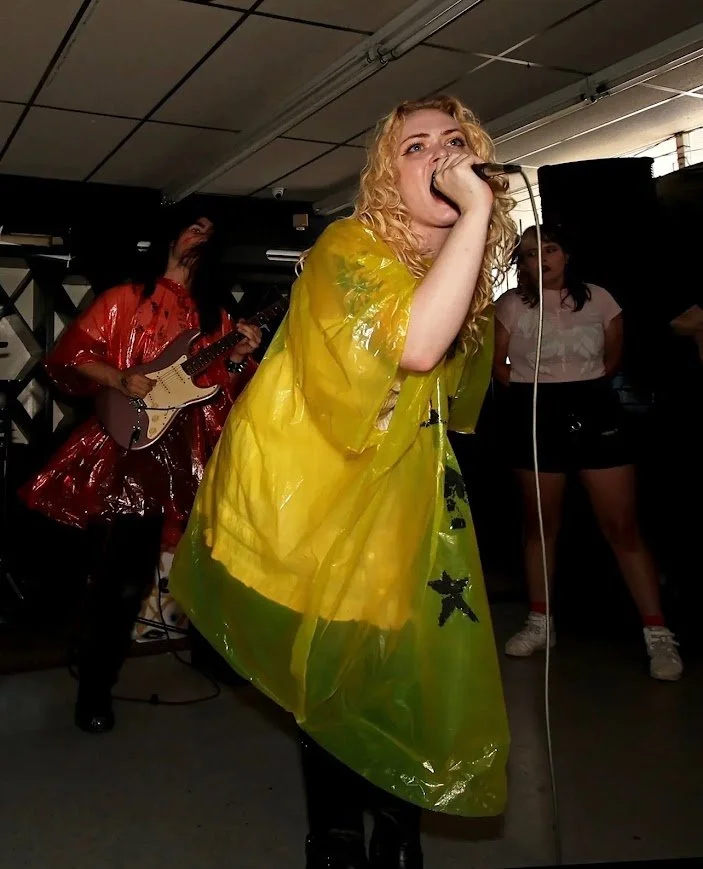
Photos from Rockstar Nightclub via Bri W. Photography“I think that’s really representative of how much movement there is within a scene, there’s all this weaving in and out… I was also going to ask what you think is particularly special about the Oklahoma City punk scene, and in the end each scene is special because of each person involved.”
“You bring up a good point there,” he responds, “99% of the bands I’m talking about don’t exist anymore due to one reason or another. [Whether it’s] personal differences, or huge issues that couldn’t be resolved… When I go to a show now, I think it’s very beautiful because what you’re seeing likely won’t exist in a year or two… There is a lot of movement in the punk scene… and that’s especially true when you look at the punk scene that came before us.” PB again mentions Zach Green, who he says is adamant on keeping the scene open to everyone, as they had been a part of it when it was still “very bigoted and racist and sexist… It was a terrible scene for a long time… When I started joining, it was still very ‘macho’, but there was an obvious split that was happening.”
He goes on to talk more in depth about his first punk project, Shaka. Many of Madrid’s peers told him about how influential the band was to Oklahoma City’s current punk scene, but he seems a little hesitant to praise himself.
“I try not to talk about our quote unquote achievements very much, but I think it pertains to this situation… Quite a few people tried to burn into my brain that Shaka was very important to OKC… It was a very adult scene and people ate us the fuck up… the more we played shows, the more we started to see younger people come around. People wanted to see these kids play punk music, [and] that allowed other kids to come into the punk scene to watch… I hate saying this, ‘cause it feels so self-absorbent… But people say that, like, Shaka revitalized the punk scene, that there was new vigor there. There were kids who wanted to be a part of this thing that had been there for a while. Not only that, but rebrand it and allow more people to come in. What Zach wanted the punk scene to be really resonated with us…”
Madrid describes the way he was raised and how that contributed to his values, “I thought that was just being a decent human being, not judging someone for how they want to live… We brought kids in who thought very much the same way we did.” They go on to talk about how the punk scene now is different from when he was first introduced to it, “Even now, when Shaka has been dead for years, you go to a punk show… and it feels like this is where the freaks still go. I know that’s not completely because of Shaka, but i’m told we had a part in it. All I ever wanted was for people to have a place to be and people to talk to, and I feel like, for a good minute, we granted that to people.”
“What happened to Shaka?” I ask.
PB gives me the short of it before diving into the longer version. Their second guitarist had been a friend, Ian, who has gone into film and sound editing since. Then Madrid tells me,
“I think Shaka would still be around if it weren’t for the punk vs hardcore discourse… I think that the punk and hardcore cultures were very different: Hardcore tends to lean more into the hard-ass mindset, and punk is a little more ‘fuck you buddy, where’s the joint?’”
“Do you feel like there’s an ideological difference there?”
“Yeah I- I do. I’ll probably catch some heat for saying it, but I think the hardcore community was far more performative than the punk fellas tended to be… At least when I was in the scene, hardcore folks made a big stink about push pits and mosh pits, and the punk scene in general, ‘cause a lot of them viewed it as ‘pussy’ shit. And that isn’t all hardcore bands. There are plenty of hardcore bands that are welcoming and loving, wonderful people.”
From there, Madrid discussed things that he’d seen happen when hardcore and punk bands would both be on bills together. “Hardcore kids would crowdkill the punk kids, and then the punk kids would get mad. Then the hardcore kids would get mad that the punk kids would get mad, like ‘fuckin’ get out of the pit if you don’t want it’. Fair enough, but maybe take into account that most of these people can’t afford to go to the hospital if they get seriously hurt. Most of the people I’ve seen being crowdkilled were people who were not gonna fight back. People on the younger side, and small girls got it the worst. You could step back as much as you want, and they would target you. I’ve seen it with my own two eyes more than enough times.”
PB went on to talk about a show they played with a hardcore punk band called DIE, that he and his bandmates all admired, with an upcoming band called Horsediver, who he also praised.
“They were young and had a Black vocalist. I don’t think that’s like a novelty, I think it’s something very important to a community like the one in Oklahoma… They did so fuckin’ good, and it was only their first show.” What caused the trouble, Madrid added, was the hardcore crowd during DIE’s set. They tell me the hardcore audience acted completely unenthused towards Horse Diver, the first band on the bill, before DIE came on, during which they crowdkilled Horsediver’s guitarist.
“…And the guitarist gets mad, y’know? So of course he’s gonna push back… Then instead of just a one-on-one scuffle, this hardcore kid gets- no he wasn’t even a kid, he was a grown fuckin’ adult- Gets two of his buddies and they jumped this kid in the pit. And he’s like ‘Well, fuck, you don’t wanna get crowdkilled, stay out of the pit!’ Like, that’s not the fuckin’ point here! DIE had to cut their set, and in the end, Horsediver got banned from [the venue] we were playing… That’s fucked.”
They went on to describe the fallout from that show.
“Shaka didn’t play a show for a while after that, and Ian and I were really, really, really bummed. That alone would’ve been bad enough, but these stupid fuckin’ hardcore twits were harassing Horsediver on Instagram. Posting fuckin’ pictures of them, like ‘no money, no bitches’. Like, sure, the money is what this is about, fuckin’ cool. You just aired your colors out to the rest of us,” He says dryly. “They wanna preach that they’re all about fuckin’ community, and sticking together, and being there for people, and then they go and pull shit like that… It’s so fucked up. This is by no means representative of the hardcore community as a whole, not by a long shot. However, at the end of the day, Horsediver never got any recompense. They absolutely got shunned by all the fuckin’ hardcore community that day… Like, what the fuck did we build all this up for?… They get mad at us for two-stepping and dancing in the pit, and smoking weed outside, but really, like, we’re just living! We’re just being fuckin’ pals… It killed my mood for the longest time… We were playing with one of our favorite groups, and I just felt so embarrassed.”
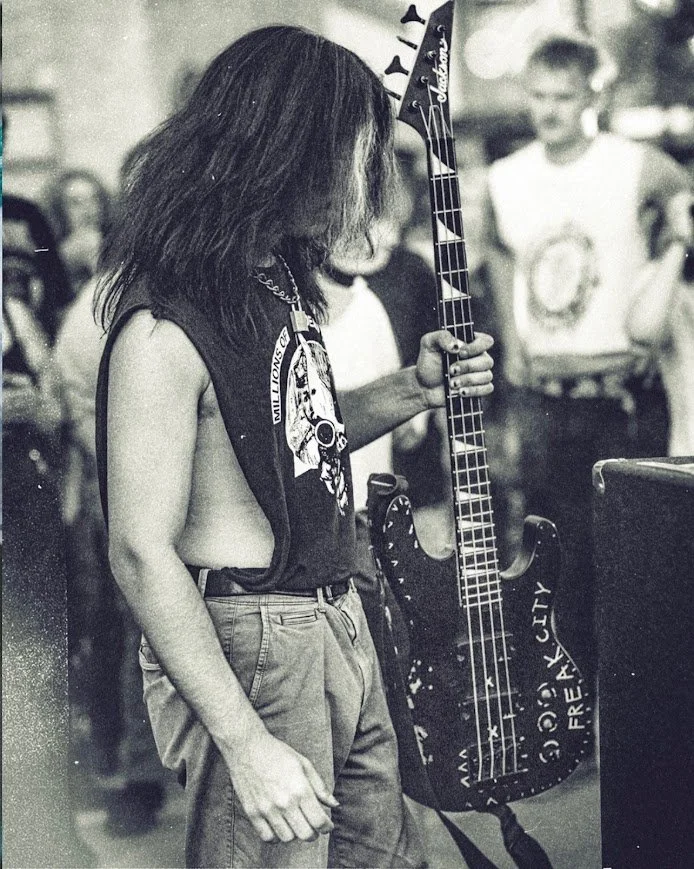
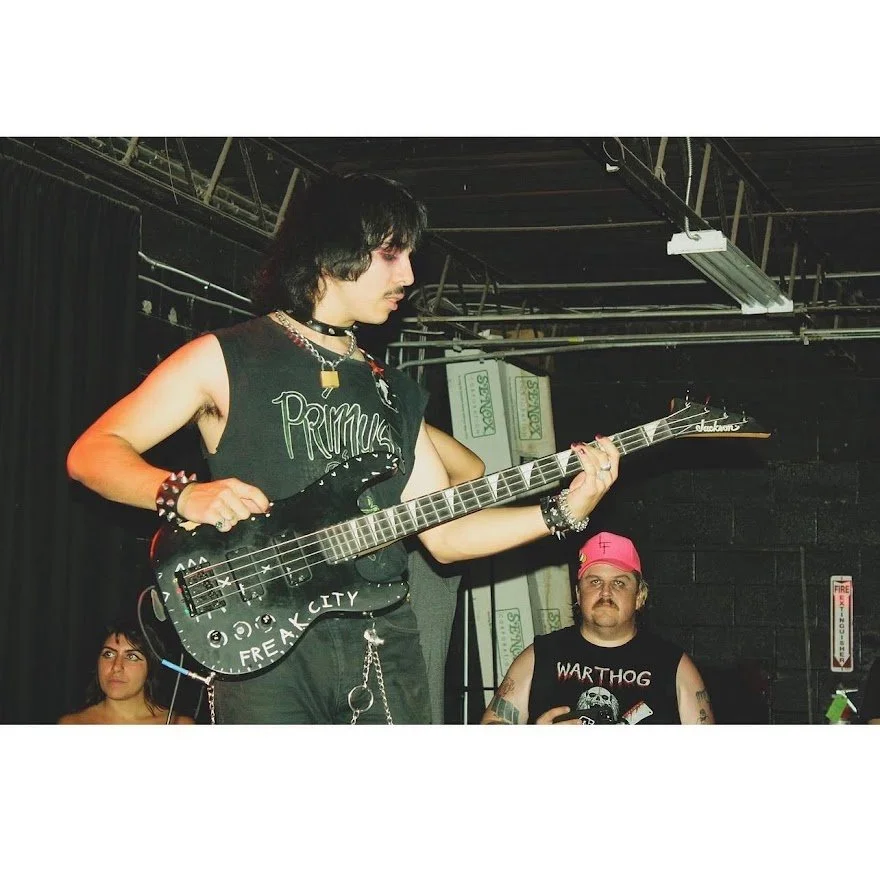
Shaka (left) via @jesse.edgar_ on IG (right) via @withtheflies on IGAs for Shaka, they said, “I kind of saw the writing on the wall.” Their last show was played in Tulsa. It was a generator show, he says, where there were around 20 people, none of which they knew. PB tells me they’ve only recently come to accept that the band is over with.
“I finally was just like, Shaka’s dead. Shaka is fuckin’ dead, and it sucks. We had a good thing going. People still ask me about, ‘is the Shaka show happening?’ And my response for the longest time was ‘maybe’, but now it’s ‘no’. It’s not gonna happen. We can’t just get another guitarist on… we just don’t wanna replace Ian like that. I think we all landed in the same place. We’re gonna move on, we’ll make better things. And this led on to Rockstar Nightclub.”
I ask him about that and the overlap in members from Shaka. He tells me that everyone from Shaka other than him was in its original lineup. “It was just something they made in the moment, they weren’t like leaving me out or anything. It was six people in a room that decided they wanted to do a band… Eventually Ian left, then Gwen left. So they needed a bassist and someone to take the other part.”
As much as Madrid enjoys being a bassist, the remaining members were set on having their current bassist, Annie, on bass guitar. In their first practice together, PB says, “She blew me the fuck away… She’s fuckin’ solid… I wasn’t sure it was going to work out the way they wanted it to, and it totally did, it totally fuckin’ showed me up.” Ian played synthesizer and keys, he tells me, neither of which Madrid had. “So I decided to take up a second guitar part, and fuck, playing guitar is so hard. But I’ve managed to play it in a way that is both easy for me and fun for me.” They go on to gush about their bandmates and the music Rockstar Nightclub makes.
“I got this crazy fuckin’ weirdo rock band I’m playing guitar in… I call it glam punk, sparkle punk almost. You think of glam rock, and you kind of think of the glitter and the colors. What I think of is their nasty makeup and their fuckin’ hairspray, and their clothes which must be just caked in sweat. It’s sparkly, it’s bright, it’s vivid, and it’s nasty.” He tells me a little more about his history with Rockstar Nightclub, starting with the first time he’d seen them play.
“… I was so happy to see my friends play, but I was sad that I wasn’t a part of it. I’m not the type of person to be like, ‘Why not me, huh?’… I’m not gonna do that… I just wanted to be a part of it so, so, so bad… After Shaka stopped playing, I wasn’t in any bands.” They go on to tell me that they were in community college for a Fine Arts degree with an emphasis on music performance, at the time and were the bassist in the jazz band.
“ I went to OCCC and I wanted to do cello. I wanted to do classical, and [my professor] was like ‘Well, we don’t have an orchestra, but we need a bassist in the jazz band.’… I partly say that I got a jazz degree there, ‘cause that’s all I was doing… That’s all I was playing, that’s all I was transcribing. That was pretty cool, but like, I wasn’t in Shaka… I got a lot of good education from that. Then they asked… Jo hit me up and was like ‘Hey, you wanna be in Rockstar?’ Fuck yeah! Like what? Come on, yeah, yes I do. What? I was like starstruck, and these are my friends… We would play, and they were like ‘This is better than it’s ever sounded before’… And it just felt so, so good.”
“I have seriously loved hearing you talk about your own musical journey and experience in the punk rock scene.”
“It’s been a pleasure to be asked to hear all these stories!”
“Do you have any words to sign off with?”
“Be a human, don’t be a dirty fuckin’ bigot… celebrate the downfall of the data centers that are stripping people’s water away. Celebrate the rotating of these gereatric, braindead, worm-infested politicians for younger faces that actually give a shit how you’re living. Treat people like people. It doesn’t matter what you like, it doesn’t matter how you live- if you love one another, that’s more than enough.”