Internet and Industry with Mike Barlow
Interview ★ Nash Jones★ @nashwritessometimes★ 6 Minutes
“You’re like a donut, just one taste and I’ll stay glazing you.”
This was the first line of a video I saw on Instagram last year: a blond musician pointing at the camera confidently, then doing something akin to a somersault all while the bridge of his song “Feminine Touch” played. I was bewildered. In the past months, I’ve observed musician Mike Barlow release his first album “Glaze”, gain over ten thousand more followers, and consistently put out promotional videos flexing, lip synching in various locations, and… seducing his keyboard. I was quick to respond to a recent inquiry on a story of his, letting any press know he was open to interviews.
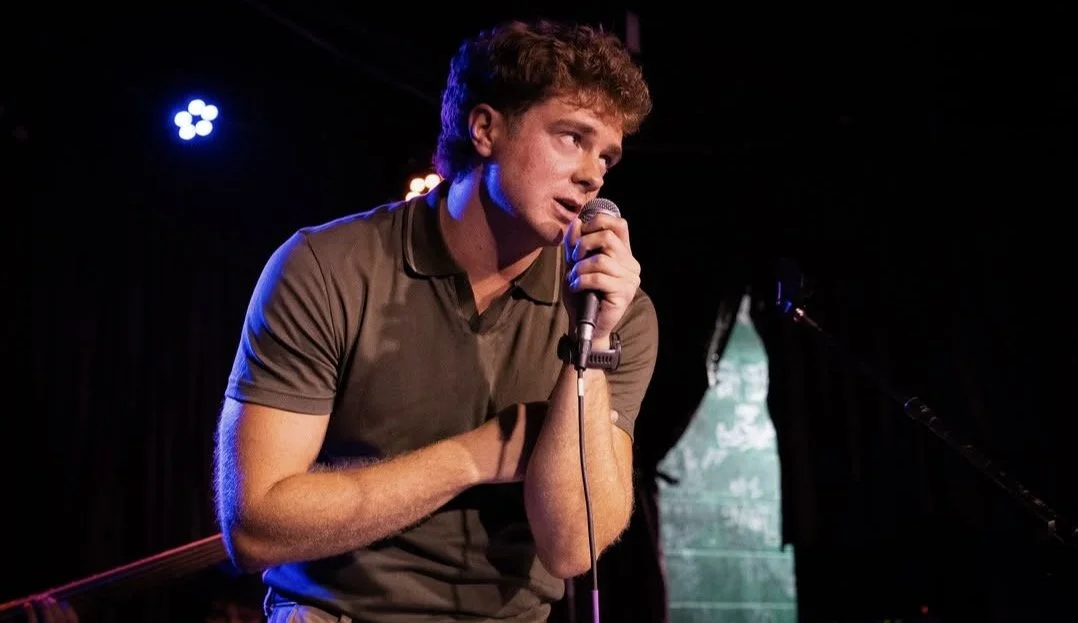
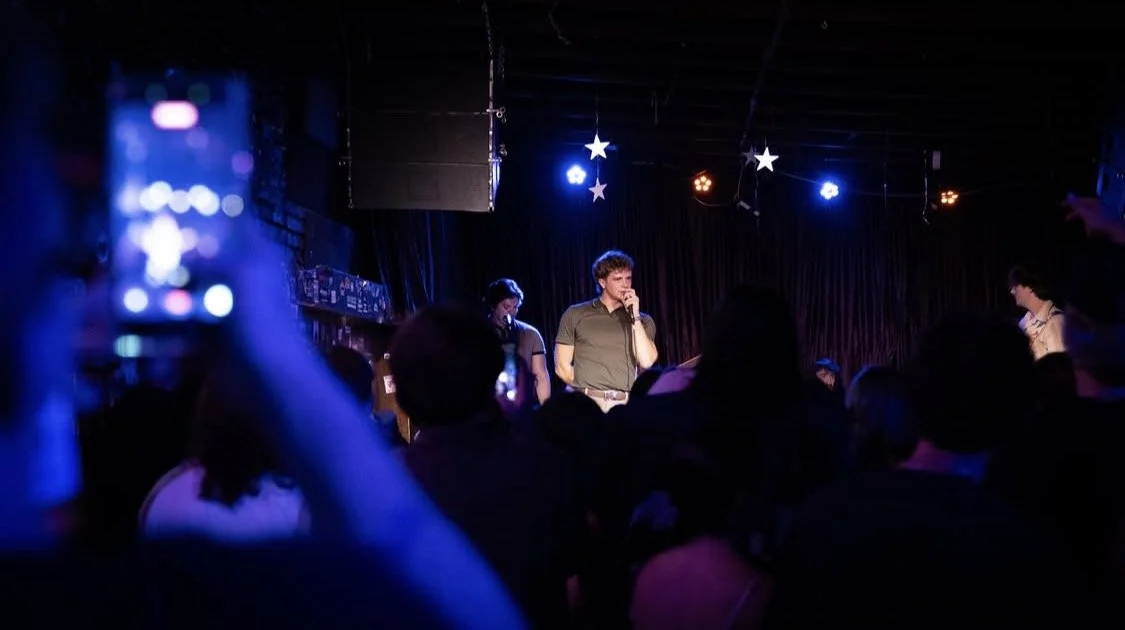
Mike Barlow via Miguel MarquezWe began our Zoom call twenty minutes late with mutual apologies due to a confusion with timezones, then got into our discussion. I first asked him about his upbringing and how it has affected his artistry.
“I was raised outside of Albany, New York, and then I went to Belmont”, Barlow tells me.
New York City is a metropolis of music and culture much closer to Barlow’s hometown than Nashville, so I ask him about the difference in the music scenes and what made him choose Nashville instead.
“Obviously they’re both massive industry cities, but what was it about Nashville that drew you in?”
Barlow takes a moment to gush about New York City.
“I still think New York City is, like, the greatest city in the world. It’s just so diverse and eclectic, and there’s never a shortage of things to do, which is super special. The music scene in New York City is fantastic… I first performed in New York City when I was sixteen… The food, the culture, the music- there’s something for everyone there.” He goes on to say, though, that Belmont University most aligned with his goals.
“Their emphasis was more on the commercial side of songwriting and music rather than solely the technical side… While they do offer that very structured classical music program— which is very important because I grew up playing classical piano, and it really helps your musicianship— I was looking for something a little freer and a little less rigid. Songwriting was a good option for me because it was about: How do we take the aspects of your musicianship and then make them commercially viable and marketable?… That was super interesting to me.” We briefly discuss both being students in contemporary music majors before I ask Barlow more about the music he makes.
“When I first saw you, it was a promo video for Feminine Touch, and you were pointing at the camera and doing somersaults… There’s obviously some comedic aspects to your music, but do you consider yourself a comedy musician?”
“I actually don’t, which might get some side-eyes from some people, but I think first and foremost my music is meant to be catchy and replayable.” He then describes some of his process, including the reason for having some comedic lyrics. “I really work on hooks and melodic structures that are meant to stick in someone’s mind before I worry about lyrics. The lyrics came from trying to get these songs heard by more people. I feel as if, in the modern times when you’re just scrolling on social media, sometimes melody isn’t enough… I think making humorous videos and lines in my songs was the avenue for that.”
I tell Barlow he’s seemed to have crafted a niche for himself before also asking, “Do you ever worry about being able to kind of, get yourself out of it?”
He isn’t concerned, he says.
“I mean, I have songs on my album that I don’t think are funny in any sort of way, and I still have fans who reach out to say that they really like those songs. It’s one of those things where it’s the way to broadcast myself out to as many people as I can, and then as I become more known as a name, people will just be more interested in what I’m doing regardless of if it’s funny or not… I hope that I can— not necessarily transition out of the funny music because I do enjoy making people laugh— But become a more multi-faceted artist, I suppose.”
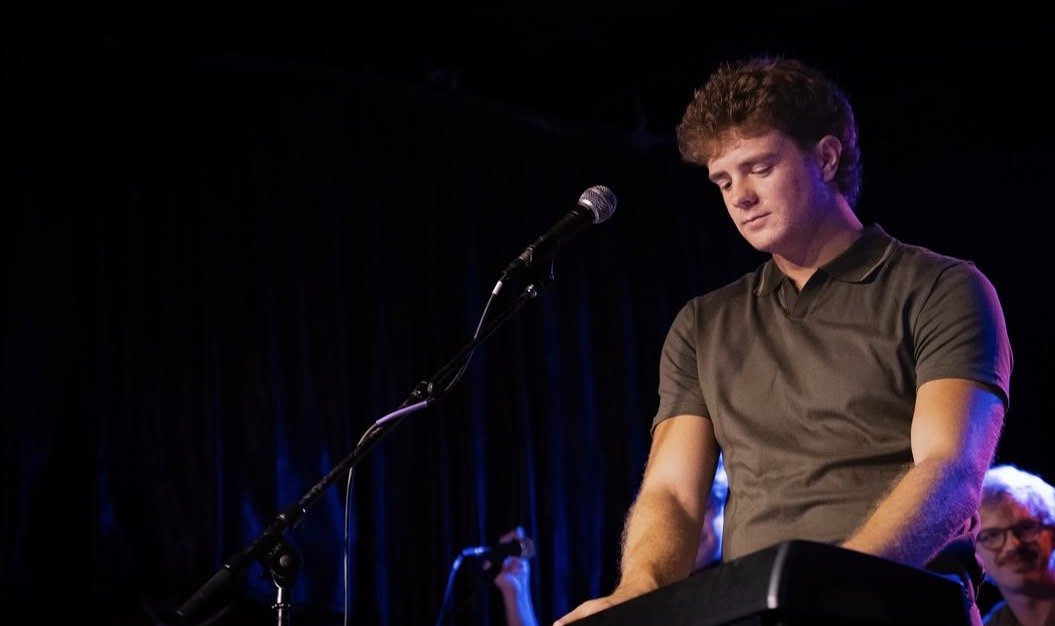
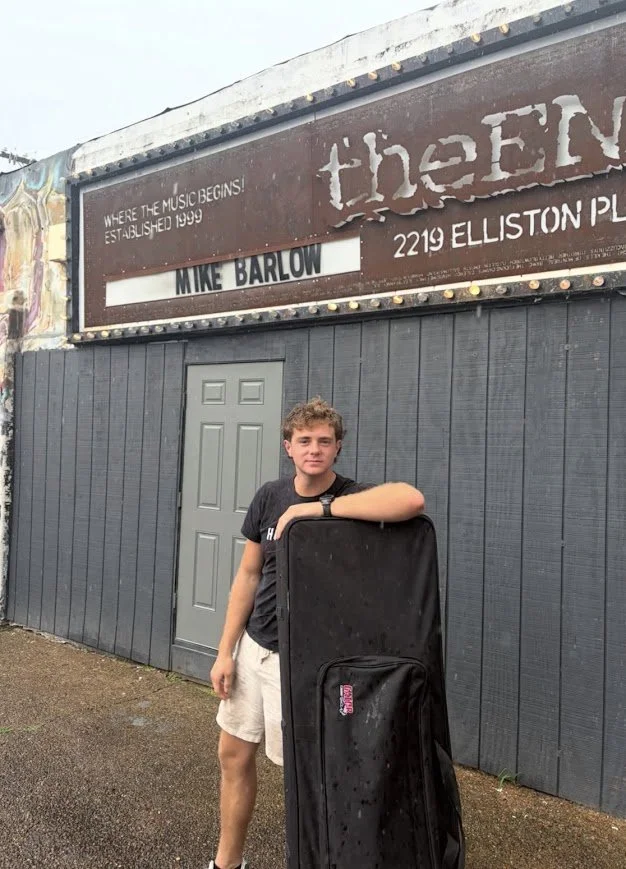
Mike Barlow, left photo via Miguel MarquezWe dig a little further into Nashville versus New York after Barlow has told me about how Belmont taught him in the commercial and promotion aspects of the industry.
“Were there particular lessons you learned from the New York scene that you still apply?”
“I think the difference in New York and Nashville might be the difference in attitudes surrounding collaboration. In Nashville, people look for collaborations. They want to cowrite with and make music with other people, and sometimes just to leverage themselves. It’s not always necessarily this ‘yay teamwork’ type of thing, but there’s a route of success in Nashville that requires you to collaborate with other people. In New York, there’s a bit more of a competitive nature that’s just more outright and explicit. There’s one in Nashville too, but it’s like, you’re going to act all warm and fuzzy to your peers and then secretly in your mind, you want to outperform them… I think it’s like the North versus South thing. Like in the South, people are a bit more passive and then up North, people are more direct.”
I nod. As a Mississippi-raised guy, I know all about the sometimes surreptitiousness of southern manners. He also says about New York that there is more opportunity for genres outside of country, but that he doesn’t mind Nashville being a country town.
“I think the competitive nature of New York is kind of a fun tool to use in Nashville. Although, I think Nashville’s taught me a lot about being peers with people in your situation, and reaching out to them.”
In light of the discussion about covertness, I ask,
“Have there been moments where you feel like someone is being malicious in their intent with you?”
Luckily, Barlow says there hasn’t been a situation like this with him directly, but that his album “Came about from me just trying to stick it to people who are pretentious. There are pretentious people anywhere, in the music industry that are very full of themselves and believe that they are like, the beacon of true musicianship.” He then compares Belmont and the music industry at large to the Disney movie Camp Rock, mentioning how popularity is often equated with greatness.
“They get all the opportunities, this, that, and the other, and everybody praises them as being great. I mean, good for them, that’s a good tool to use. I was just getting kind of sick of feeling like I was pushed behind everyone else, so I tried to create something that really stood out. I don’t think anyone has reached out to be malicious, but they definitely do it to each other. I’d be in songwriting class and there would be someone who had gotten a publishing deal or some sort of opportunity, and then everyone would race to write with them… Everyone is chasing that opportunity for themselves, and then they brand it as ‘being collaborative’.” Barlow clarifies that desire to collaborate isn’t always disingenuous, then gets further into the nature of the modern music industry.
“Here’s the thing— I don’t view music as competitive. I think art and sport are two different entities… People definitely do treat it as a sport, though. I appreciate the willingness to acknowledge that in New York, whereas in Nashville, I feel like sometimes people are a little more slimy about it.”
I ask Barlow if there’s any last thing he wants to mention or shout out, to which he responds “Nashville.”
“I love it, even though I’ve said my piece on the negative side of it. There are a lot of good opportunities here, and a lot of fantastic people.”