A Lightning Strike Hitting Pop Culture: Antoine Fuqua’s “Michael”
Film Review★ Leanna Hubers ★ @leannagirly ★ 4 Minutes
"The most remarkable thing about’ Michael’ is what's happening after people leave the theater."
The new Michael Jackson biopic feels like a lightning strike hitting pop culture once again. For two hours, the film pulls you into the orbit of a man who was so painfully human. The performances, the recreations of the tours, the studio sessions, all remind you why Michael Jackson became the legend he remains today.
What’s most fascinating is what the movie is creating online. It feels like Michael Jackson’s fame is erupting all over again in real time. Social media has turned into a storm cloud of videos, “Beat It” dance recreations, old interviews, people rediscovering deep cuts, teenagers hearing “Billie Jean” or “Human Nature” for the first time and reacting like they uncovered buried treasure, and just edits of the man himself. The internet moves fast, but this movie slowed everyone down long enough to remember how enormous Michael’s presence was. You can already feel the cultural shift happening. People are revisiting the phenomenon itself. In an era where fame is often measured in algorithms and viral moments there’s something amazing about watching a modern audience rediscover someone whose legacy still stretches.
Beneath the impossible level of fame, the film captures the strange loneliness and brilliance of a person who changed entertainment forever. Walking out of the theater, instead of just a biopic it feels like you witnessed the return of a cultural supernova. The film has flaws. Some moments rush through important chapters of his life, while others simmer on his relationship with his father. Given the enormous role his childhood trauma played in shaping him, that focus is understandable, though the pacing occasionally feels uneven. The story is expected to continue in a second installment, which may explore later chapters of Michael's career. Honestly, the emotional weight and the passion behind it still carry the film forward.
And at the center of all of it is Jaafar Jackson, who gives a performance that honestly feels uncanny at times.
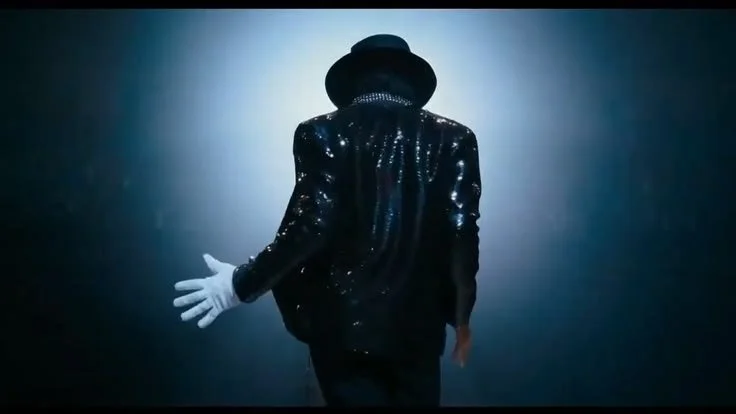
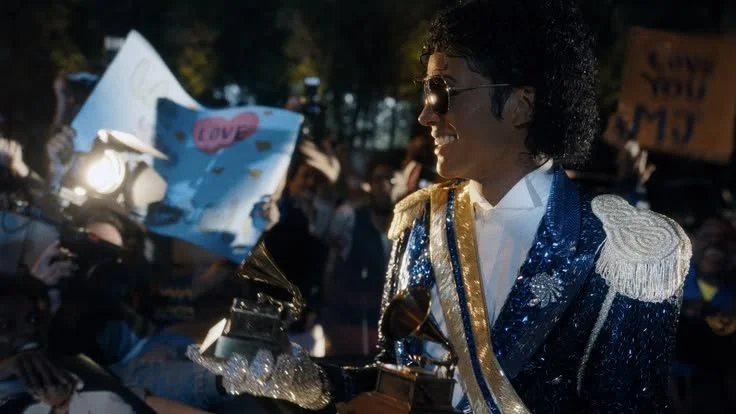
There was enormous skepticism before the movie came out because playing Michael Jackson is one of the hardest acting jobs imaginable. Fans know every vocal inflection, and every tiny mannerism. Fans in the audience can spot a fake Michael instantly, yet Jaafar somehow disappears into it. What makes his performance so impressive is the obvious stuff like the dancing and impersonating perfectly. The choreography sequences are handled with precision, considering he studied and prepared for three and a half years for the movie. Every spin, pause, and hand gesture feels deeply studied without looking too robotic. You can see the time that was spent, physically and psychologically. The movements never feel copied.
Even the smallest details are there. The way young Michael would avoid eye contact on stage and other mannerisms stood out. Specifically, he mirrors Michael Jackson's childlike way of being like smiling with a careful gentleness around people. There are moments in the film where the illusion becomes almost startling. During certain performance scenes, especially when the lighting hits just right, it stops feeling like someone playing Michael Jackson and starts feeling like recovered footage. Its seriously uncanny, yet the performance works because Jaafar never chases a caricature but performs him as a person carrying extraordinary weight.
One of the film’s strongest qualities is its portrayal of Michael’s independence. The movie repeatedly shows someone trapped inside the machinery of his own fame. There are scenes where Michael appears almost floating through his own house by his brothers, and alone in the recording studio like someone who belongs everywhere and nowhere simultaneously. At the same time, the movie doesn’t forget Michael’s artistic brilliance. Watching him build songs and obsess over details, whether refining a rhythm, rehearsing a movement repeatedly and shaping the cinematic world of 'Thriller,' reminds viewers that his success wasn’t accidental. The film presents Michael as an artist whose pursuit of perfection extended to the smallest details, many of which audiences would never consciously notice. The movie presents Michael as someone who genuinely lived for art. Even today, artists across genres still borrow from a blueprint he helped create decades ago.
By the end, the film leaves behind a strange emotional mixture of awe and sadness. Awe for the sheer scale of his talent. Sadness for the isolation that seemed to follow him everywhere. The movie understands that Michael Jackson’s life was built from contradictions: confidence and fragility, innocence and fame, spectacle and independence, perfectionism and pain. The same fame that made him unavoidable seemed to isolate him from ordinary life. What makes this so good is that rather than solving those contradictions, the film lets them exist together. For an audience raised on algorithms and influencers, the film gives a glimpse into something totally different: a time when one person could dominate global culture in a way that feels impossible today.
With this Film for a couple of hours, the King of Pop feels present. And judging by the storm taking over the internet right now, I can guess we’re all attempting to moonwalk again.