40 Years of “Ferris Bueller’s Day Off”
Article ★ Emmy S.★ 8 Minutes
“Life moves pretty fast. If you don’t stop and look around once in a while, you could miss it.”
In my opinion, 1986 was the absolute best year for movies. So many incredible films were released that year, like Top Gun, Pretty in Pink, Labyrinth, and, of course, Ferris Bueller’s Day Off. Endlessly quotable and jam-packed with iconic scenes, this John Hughes classic about a high school senior cutting class has undoubtedly earned its flowers in the forty years after its release. Ferris Bueller’s influence on the cultural zeitgeist cannot be understated.
Also, spoilers ahead!Production & Release.
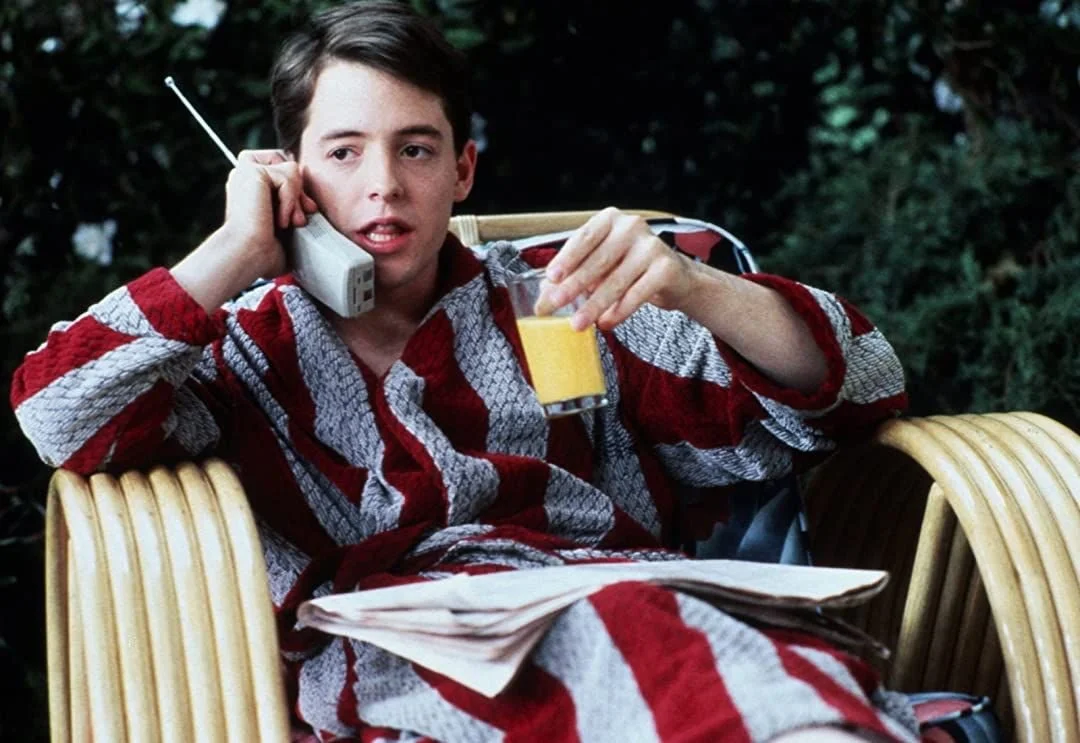
John Hughes, acclaimed director of teenager-centric movies such as The Breakfast Club, Sixteen Candles, and Weird Science, originally began writing the script in 1985. Writing the screenplay in less than a week, Hughes essentially filmed the movie based on the very first draft. Hughes has also gone on record to say that he had the movie’s star, Matthew Broderick, in mind while writing. Ferris Bueller’s Day Off is unique, as it lacks many of Hughes’ “Brat Pack” actors, or those whom he cast very often.
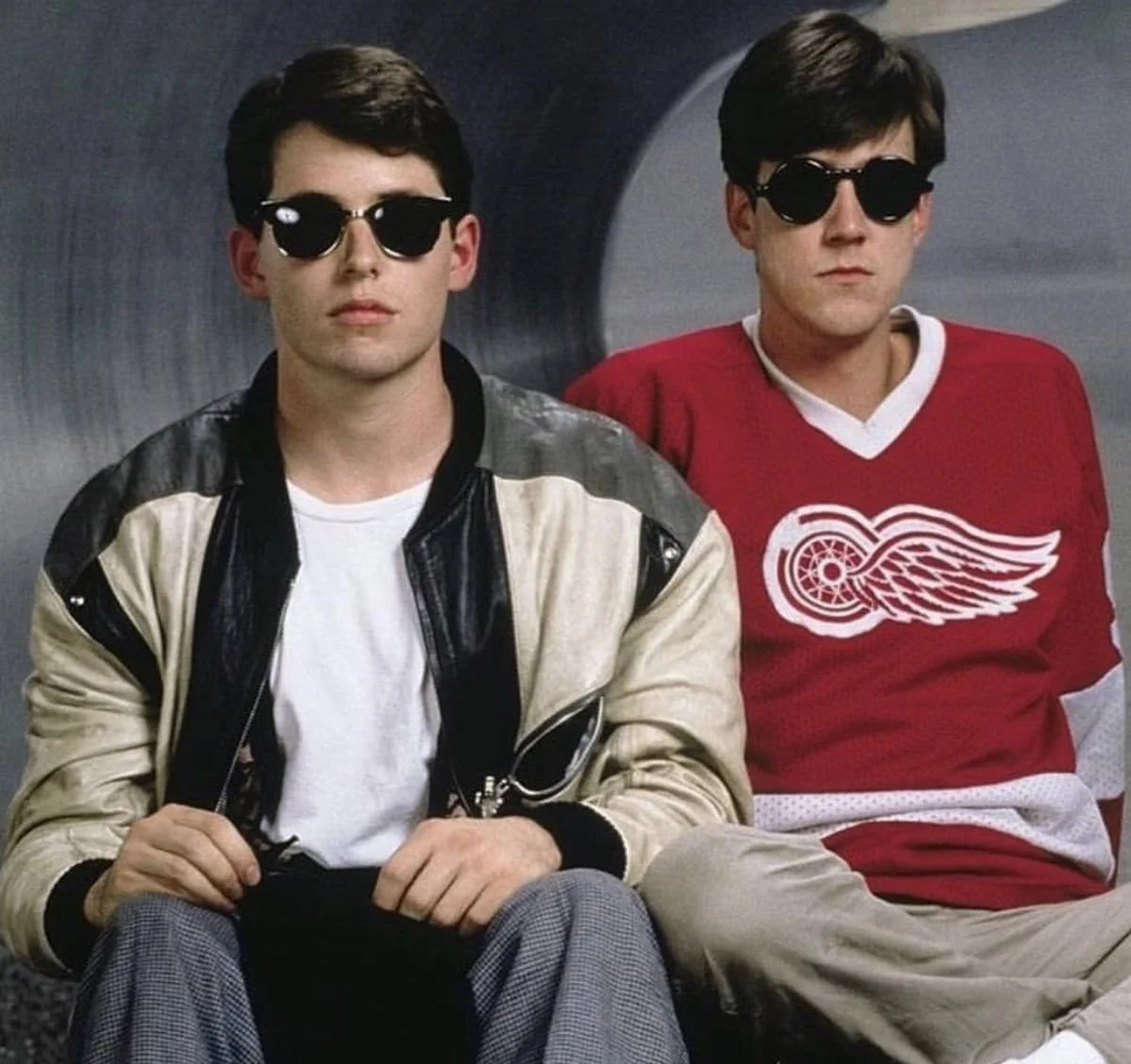
Instead, the cast consisted of the aforementioned Broderick in the title role, Alan Ruck as Cameron, Ferris’ hypochondriac best friend, and Mia Sara as Sloane, Ferris’ girlfriend. Also in the cast is Jennifer Grey, who played Ferris’ sister Jeanie and would later go on to star in Dirty Dancing opposite Patrick Swayze one year later. The decision to cast actors Hughes had not previously worked with was incredibly refreshing from a viewing standpoint. It helps this movie to stand out amongst his other works. That’s not saying that I don’t like the “Brat Pack” movies, though.
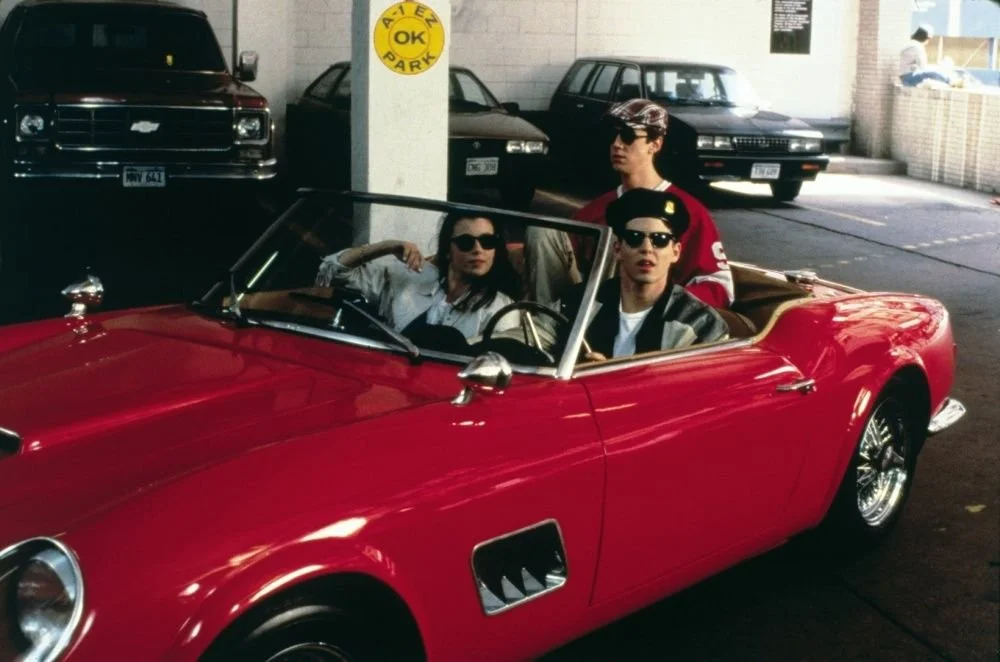
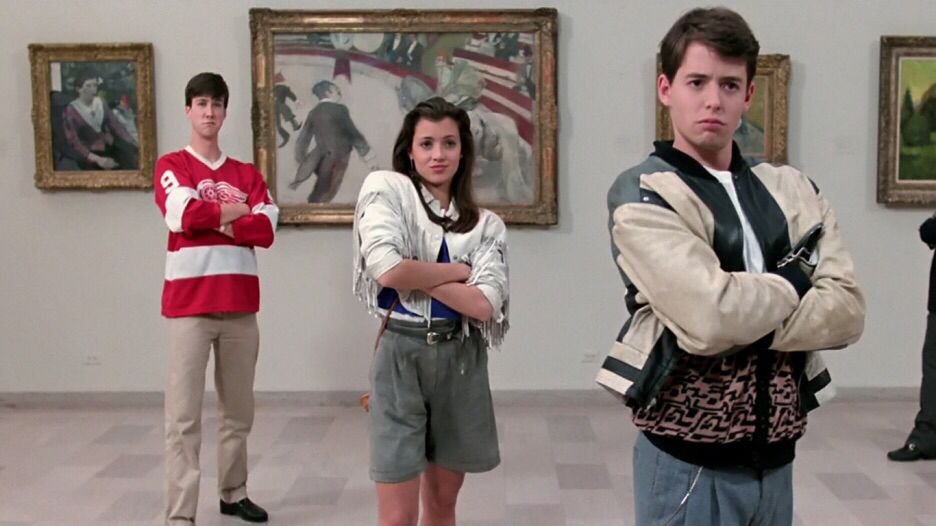
The film itself is inherently a love letter to the city of Chicago, Illinois. After faking sick, Ferris recruits “sick” Cameron and at-school Sloane to cut class with him and take Cameron’s father’s 1961 Ferrari 250 GT California on a tour of Chicago. While playing hooky, the gang find themselves at many iconic sites in the city such as Wrigley Field, the Art Institute of Chicago, and the Skydeck of Willis Tower. Hughes himself lived in a suburb of Chicago for much of his life, so it makes sense why he would want to pay tribute to it.
The movie released on June 11th, 1986 to primarily positive reviews from critics and audiences alike. It was given a spot in the National Film Registry and Library of Congress, and was even quoted by First Lady Barbara Bush in her 1990 Wellesley College commencement address. The film grossed $70,136,369 during its US run, making it the 10th highest grossing movie of 1986, and Broderick went on to be nominated for a Golden Globe in 1987 for his role as Ferris Bueller. But nevermind the technical stuff, what do I think?
The Comedy.
This movie is funny. Like really funny. I have seen it around nine times (which is the same amount of times Ferris was absent from school) and it never fails to get me laughing. John Hughes, at his core, was a comedy writer. He worked on multiple National Lampoon movies (including my favorite, National Lampoon’s Christmas Vacation,) and wrote and sold jokes to Rodney Dangerfield (who, by the way, was amazing in Caddyshack.) I attribute the funniness of this movie to Hughes’ decision to make the teenagers far smarter than the adults in this movie.
The scene where Ferris’ mom checks up on her “son” (a mannequin he rigged in his bed) and doesn’t suspect a thing is absolute gold. Another scene I love is when Ferris and Cameron call their school’s principal to get Sloane out of school. Principal Rooney’s reaction is absolutely priceless and Grace is incredibly funny as well. Even in scenes that don’t have any outright jokes, this movie still finds ways to be subtly funny. A quick glance from Ferris at the audience here, or a glimpse of the valet workers joyriding in the Ferrari there, and other little moments like this really bring the comedy to the next level.
The Fourth Wall.
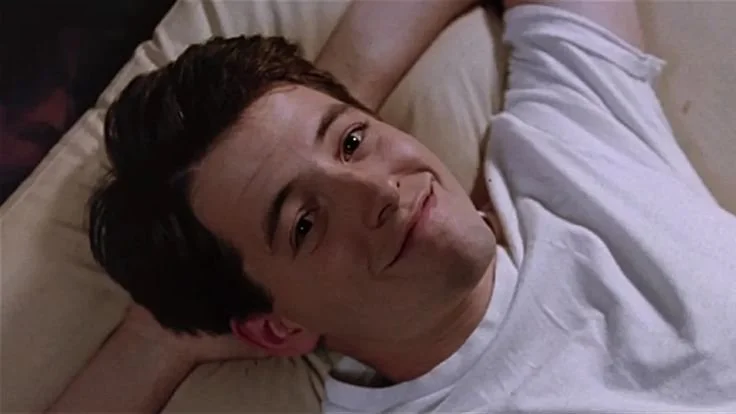
Throughout the movie, Ferris regularly breaks the illusion and speaks directly to the audience. This has got to be one of my absolute favorite parts of this movie. It's so fun to be watching a scene and have our hero give the audience a touch of wisdom, a piece of exposition, or something from his internal monologue. It also helps to flesh out the characters more, which leads me into my next thought…
This Movie is Actually About Cameron.
Ferris’ primary motivation for his day off is his hatred of high school, of course. However, his other motivation is to get Cameron out of the house. Cameron, in the words of our title character, “is so tight, if you stuck a lump of coal up his ass, in two weeks you’d have a diamond.” Clearly, he needs this day off more than Ferris. It is also hinted that he has a rocky relationship with his parents, claiming that his father has never trusted him, telling Ferris that it is “unfortunate” that his mother will not be staying in Decatur, where she is on a business trip, and claiming that his parents actually hate each other in the trading floor scene where Ferris asks Sloane to marry him.
When Ferris needs the Ferrari to pose as Sloane’s father to get her out of school, it essentially kick-starts Cameron’s character arc. He begins as a very “play-it-safe” kind of person, due to his upbringing in a home Ferris described as a museum and having two unloving parents. Allowing Ferris to take his father’s car is his first step towards his eventual freedom from the clutches of his parents’ expectations. In the Art Institute of Chicago scene, with The Dream Academy’s instrumental version of “Please Please Please Let Me Get What I Want” playing in the background, Cameron finds himself fixated on a particular figure in A Sunday Afternoon on the Island of La Grande Jatte by Georges Seurat.
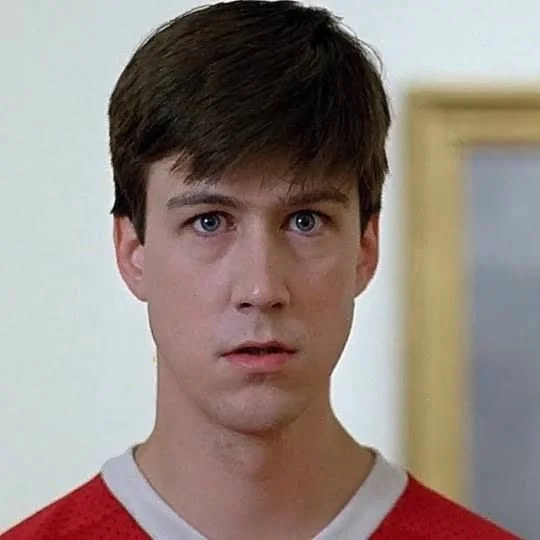
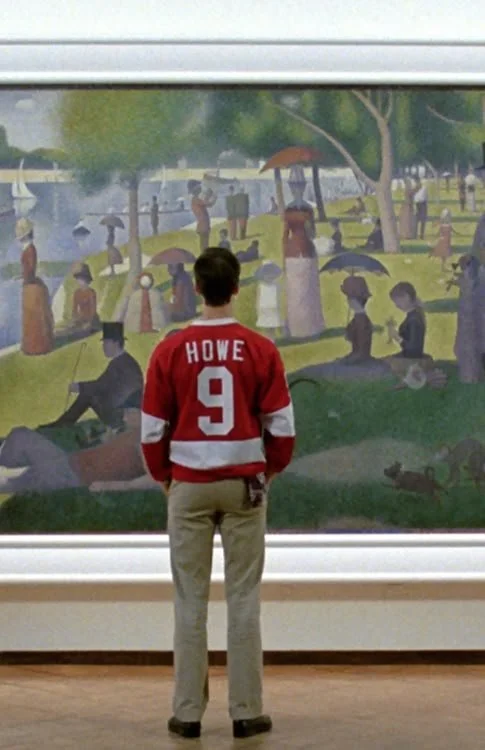
As the camera flips between Cameron and the painting, it gets closer and closer until the figure’s face becomes so distorted that it’s just a mass of nondescript color. This specific scene is incredibly important to the character analysis of Cameron Frye. As he gazes upon this painting, he slowly realizes that this specific figure is a reflection of himself. The closer you get, the more you realize that there really is nothing. The final piece of Cameron’s arc is when the Ferrari goes through the back of the garage. This is when Cameron has his great realization and proclaims that, this time, he will stand up for himself and actually enjoy the rest of his life, rather than just suffering through it all. His destruction of the car is symbolic of the destruction of his mental barriers. He is the one tearing these down and taking charge of the course of his life. His speech at the end is one of my absolute favorites. Alan Ruck put such emotion and depth into his performance as Cameron and I can’t imagine anyone else in the role. The entire sequence is incredibly powerful and memorable.
At the end of all of it, it can be concluded that, while Ferris’ name is attached to the title, he really remains a static character; It’s Cameron that has all of the changes, and that’s what makes this movie great. Ferris is used as a device to help Cameron come to these conclusions and ultimately allowing the audience to watch him blossom into a full character.
Jeanie’s Here, Too!
Ah, Jeanie Bueller, I could never forget you! An often overlooked character, both by those in the movie and audiences, Jeanie also had an arc, even if it was mostly off-screen. Jeanie Bueller no-doubt resents her brother, as he seems to be at the center of their parents’ attention. Sick and tired of watching Ferris get away with everything, She tries tirelessly to rat him out to their parents to ultimately no avail. After Principal Rooney breaks into the Bueller home to try to catch Ferris as well, Jeanie finds herself at the police station and has a conversation with Charlie Sheen’s criminal character, Garth, where she realizes that she needs to stop worrying about Ferris and focus on her own life. It’s like her version of Cameron’s arc, with Ferris leading the way yet again.
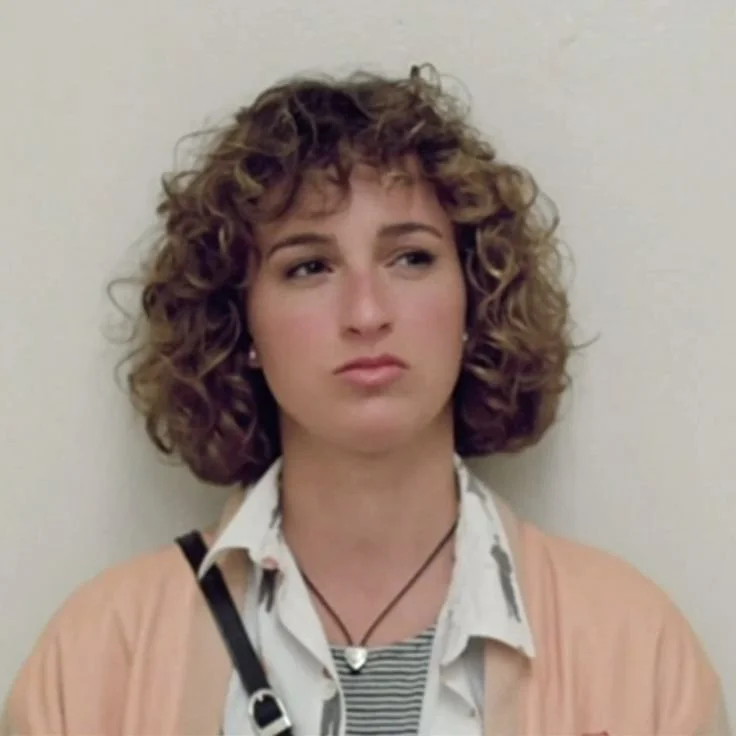
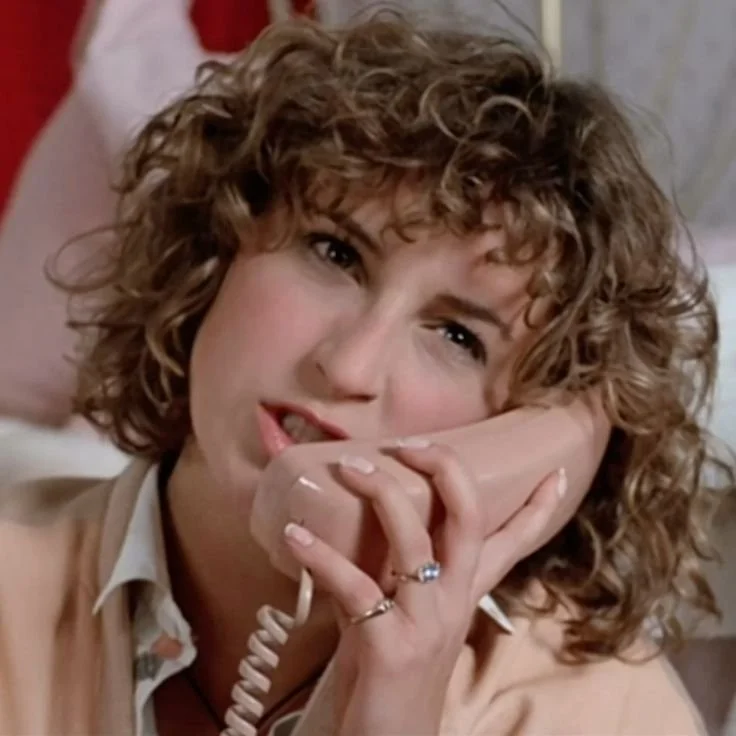
I absolutely loved Jennifer Grey’s performance in this movie. She plays the perfect jealous sister and she spits her comebacks in a way I could only dream of imitating. Seriously, Grey plays Jeanie as so over everything and it makes for incredible comedy. It's so nice to see her finally smile at the end, as well.
Why Have You Seen This Nine Times, Emmy? Or, My Conclusion.
When I was in middle school, likely after watching Stranger Things, I had an obsession with all things 80s. I would wear a scrunchie in my hair every day, I would exclusively listen to music made before 1989, and I watched as many movies from the 1980s as I could. Retrospectively, this was my gateway drug into the world of vintage, but I digress. I caught this movie and watched it all the way through for the first time on Pluto TV in 7th grade and it absolutely rewired my brain. It taught little 12-year-old me to not take my life so seriously and to always find something fun in every situation. There was nothing I could realistically do with this lesson, as in middle school life isn’t that serious anyways, but I held on to it for later. I did, however, force all of my friends to watch it with me, but I’m not sure if they were affected by it in the same way I was.
Now, I graduate high school in a week. Standing on the threshold between childhood and adulthood, I can’t help but appreciate the profound impact this movie has had on my mindset. I’ve realized through my senior year that this really is it. I’ll never be in high school, or a teenager, or as carefree as I am now, ever again. It has inspired me to take advantage of my youth, to have as many adventures as I can, and to appreciate every day because, after all, life does move pretty fast.
Sappy stuff aside, this really is the perfect movie in my eyes. There’s just enough comedy and just enough heart to create the perfect balance. As I’ve previously mentioned, the stand-out performance is Alan Ruck as Cameron Frye, but everyone did such a great job in this movie. Hands-down, my favorite scene is the final chase. I love the way most of the plot points, like Principal Rooney’s breaking-and-entering, the baseball, and the Vermont people, are brought together and tied up in a satisfying bow.
The ending is so perfect, actually, that Dominos Pizza parodied it with Joe Keery in 2017, showing the longevity of this movie in popular culture. Clips from the movie also appeared in Teenage Mutant Ninja Turtles: Mutant Mayhem (2023), which is a whole other “incredibly important to me” can-of-worms to open. (When I was little, I LOVED the Ninja Turtles and seeing them and this movie come together was so special!!) In essence, nobody has forgotten about this movie. It has touched the lives of so many people, including my own, and has woven its way into pop culture history as one of the best coming-of-age movies to date.
I will love this movie forever and ever. Even if you don’t look into it as much as I have, it is an extremely enjoyable watch. It’s funny, witty, and has a ton of heart. It will always be my first suggestion, as I believe that as long as you’re human, you will absolutely get something out of this film.